
- Published by:
- Dr Rukhsana Jabar
- Medically reviewed by:
- Dr Rukhsana Jabar
- Last reviewed:
- Published:
- Last updated:
- Reading time
- 7 min read
HBOT Side Effects and Safety: What Can Go Wrong and How Often
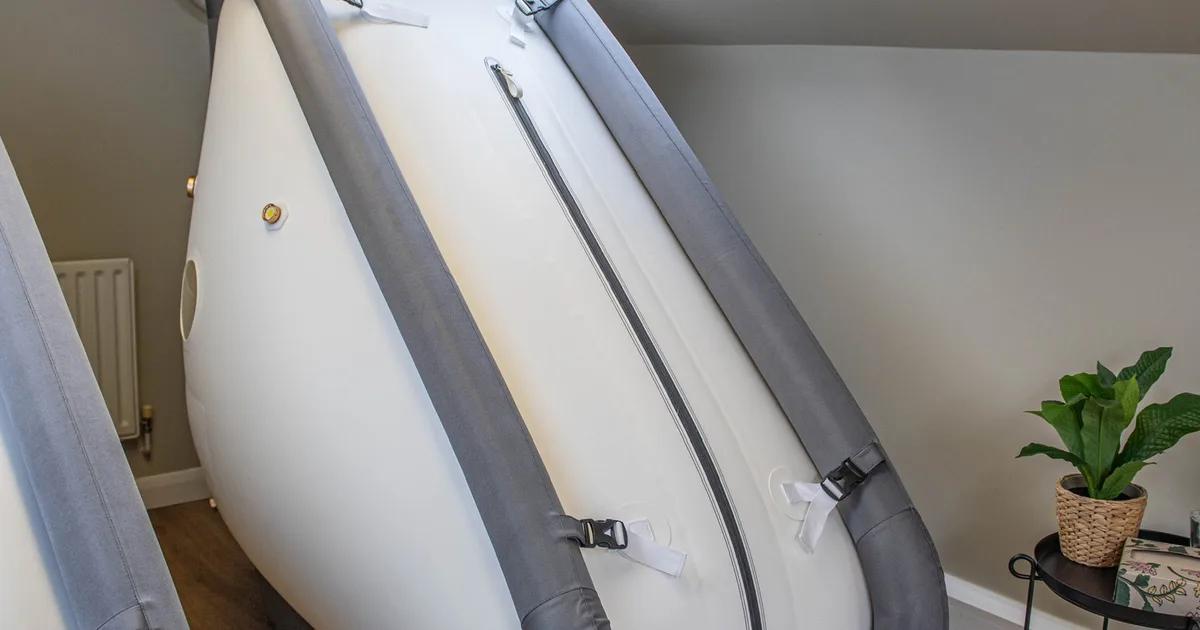
Hyperbaric oxygen therapy's most common side effect is ear discomfort during pressure changes, and its most serious risks are rare and largely preventable by screening. That is the accurate summary, and the detail underneath it is worth reading if you are considering a course.
The common side effects
Ear and sinus pressure (very common). As the chamber pressurises, the air in your middle ear compresses and the eardrum pulls inward until you equalise. It feels exactly like an aircraft descending. You clear it by swallowing, yawning, or pinching your nose and gently blowing. If you cannot clear it, you tell the operator and they slow or pause the descent.
Middle ear barotrauma; where the pressure difference causes actual irritation or fluid behind the eardrum; is the single most frequent complication of HBOT. It is nearly always mild and self-resolving, and it is largely avoidable: pressurise slowly, learn the technique properly, and never dive with a cold or blocked sinuses.
Tiredness afterwards (common). Many people feel flat or sleepy for a few hours after a session. It passes and is not a warning sign.
Temporary short-sightedness (common on long courses). High-dose oxygen changes the shape and refractive index of the lens. Over 20 or more sessions, distance vision can blur; people notice it driving. It reverses, typically over weeks to a few months after the course ends. If you have cataracts already, they may progress faster, which is a conversation to have before starting rather than during.
Claustrophobia (variable). A monoplace chamber is transparent and you can see out and talk to staff throughout, which is enough for most people with mild claustrophobia. If enclosed spaces are a genuine problem for you, say so before you book, not on the day.
The rare but serious ones
Oxygen toxicity seizure. High-dose oxygen at pressure can, uncommonly, provoke a seizure. Risk rises with pressure and session length, which is one reason wellness protocols run at the lower end of the pressure range. Air breaks; short periods breathing normal air mid-session; reduce it further. The seizure itself is not damaging; the management is to reduce oxygen and it stops.
Pulmonary barotrauma. If air is trapped in the lung and cannot escape as pressure drops, it expands. This is why untreated pneumothorax is an absolute contraindication and why lung conditions that trap air need specialist assessment. In screened patients this is rare.
Confinement anxiety severe enough to abort a session. Not dangerous, but worth naming: the session can be stopped, and it is stopped slowly rather than instantly, because rapid decompression carries its own risks.
Who should not have hyperbaric oxygen therapy
| Reason | |
|---|---|
| Untreated pneumothorax | Absolute contraindication; trapped air expands dangerously on decompression |
| Severe COPD with CO₂ retention | High-dose oxygen can suppress respiratory drive |
| Large emphysematous bullae | Air-trapping risk in the lung |
| Recent ear or sinus surgery | May be unable to equalise safely |
| Active ear infection or heavy cold | Equalisation is unreliable; postpone rather than proceed |
| Bleomycin, doxorubicin, cisplatin | Known interaction with high-dose oxygen |
| Uncontrolled high fever | Raises seizure risk |
| Pregnancy | Requires individual clinical assessment |
That table is the reason screening exists. None of it is exotic; it is a medical history and a conversation; but it is the difference between hyperbaric oxygen as a medical treatment and hyperbaric oxygen as an unsupervised consumer product.
The fire question
Oxygen does not burn, but it makes everything else burn far more readily. Hyperbaric chambers are run with that in mind: cotton clothing only, no oils, lotions, hair products, aerosols or synthetic fabrics, no electronics, no lighters. It can feel excessive at the door. It is not; chamber fires are the mechanism behind essentially every catastrophic hyperbaric incident on record, and every one of those precautions traces back to a specific historic event.
A clinic that is relaxed about this is a clinic to leave.
What "safe" actually depends on
Three things, in order:
- Screening before the first session. A real medical history, checked against the contraindications above, by someone qualified to interpret it.
- Supervision during. Someone monitoring, able to slow the descent, call an air break, or abort.
- Appropriate pressure and dose. Higher is not better. Wellness and recovery protocols sit at the lower end of the clinical range for good reason.
Home and studio soft chambers typically have none of the first two. They run at low pressure, which reduces some risks, but the absence of screening is the part that should give you pause; the contraindications do not disappear because the pressure is lower.
If you're considering HBOT because you're exhausted
Worth a moment before booking a course.
Hyperbaric oxygen raises how much oxygen dissolves in your blood plasma. It does not address why your blood was under-delivering oxygen in the first place. If the answer to that is iron deficiency; common in the UK, particularly in women with heavy periods, in pregnancy, and after surgery; then you are treating a downstream symptom while the cause continues.
Low iron means less haemoglobin, and less haemoglobin means less oxygen carried, no matter how much you breathe. It is diagnosed with a ferritin blood test and it is treatable. That is a much cheaper thing to rule out first.
Persistent tiredness has a short list of common causes
Low iron is near the top of it, and a ferritin blood test is how you find out. Check your symptoms in two minutes and get your free personalised plan.
Check symptoms + get free planFree telephone consultation · No referral · No waiting list
The bottom line
For a screened, supervised patient, hyperbaric oxygen therapy is a well-tolerated treatment whose commonest side effect is a blocked-ear sensation you already know from flying. The serious risks are real but uncommon, and nearly all of them are managed by the medical history taken before you ever enter the chamber.
The safety question is therefore less "is HBOT safe" and more "is this provider screening me". Ask.
Sources
- NHS England, Clinical commissioning policy: hyperbaric oxygen therapy for carbon monoxide poisoning: NHS England states that hyperbaric oxygen is not routinely commissioned for the treatment of acute carbon monoxide poisoning.
- Cochrane, Hyperbaric oxygen therapy for chronic wounds (2015): the Cochrane review found improved healing of diabetic foot ulcers in the short term but not at 12 months, and judged the trials methodologically weak.
- NICE, Multiple sclerosis in adults: management (NG220): recommendation 1.5.11 states "Do not offer hyperbaric oxygen to treat fatigue in people with MS".
Medically reviewed by Dr Rukhsana Jabar ("Dr Ros"), GMC-registered doctor (GMC 7265326).
Related reading: HBOT benefits: what the evidence shows · What is a hyperbaric chamber? · What is hyperbaric oxygen therapy? · Does the NHS offer HBOT?
In Wales: Hyperbaric oxygen therapy in Cardiff · HBOT across Wales
Frequently asked questions
What are the side effects of HBOT?
The most common side effect by a wide margin is ear or sinus discomfort during pressure changes, similar to an aeroplane descent. Temporary short-sightedness can develop over a long course of sessions and usually reverses within weeks of finishing. Fatigue after a session is common and mild. Serious complications; oxygen seizure, lung barotrauma; are rare in screened, supervised patients.
Is hyperbaric oxygen therapy safe?
In a supervised clinical setting with proper pre-treatment screening, HBOT has a strong safety record. The safety depends on the screening: untreated pneumothorax, certain lung conditions, recent ear surgery and some chemotherapy drugs make hyperbaric oxygen unsafe. A provider that does not take a medical history before your first session is skipping the step that makes it safe.
Who should not have HBOT?
Anyone with an untreated pneumothorax must not have HBOT; it is the one absolute contraindication. Caution and specialist assessment are needed for severe COPD with CO2 retention, large emphysematous bullae, recent ear or sinus surgery, active ear infection, uncontrolled high fever, pregnancy, and patients on bleomycin, doxorubicin or cisplatin.
Can HBOT damage your ears?
Middle ear barotrauma is the most common HBOT complication, caused by not equalising pressure during descent. It usually means temporary discomfort or a feeling of fullness, and it resolves. It is largely preventable by learning to equalise properly, pressurising slowly, and postponing sessions when you have a cold or blocked sinuses.
Does HBOT affect your eyesight?
Temporary short-sightedness (myopic shift) can develop during a long course of hyperbaric oxygen; typically after 20 or more sessions; because high-dose oxygen alters the lens. It is not permanent. Vision generally returns to baseline within weeks to a few months after finishing. Existing cataracts may progress faster, which is worth discussing beforehand.