
What Is Hyperbaric Oxygen Therapy (HBOT)? A Complete Guide
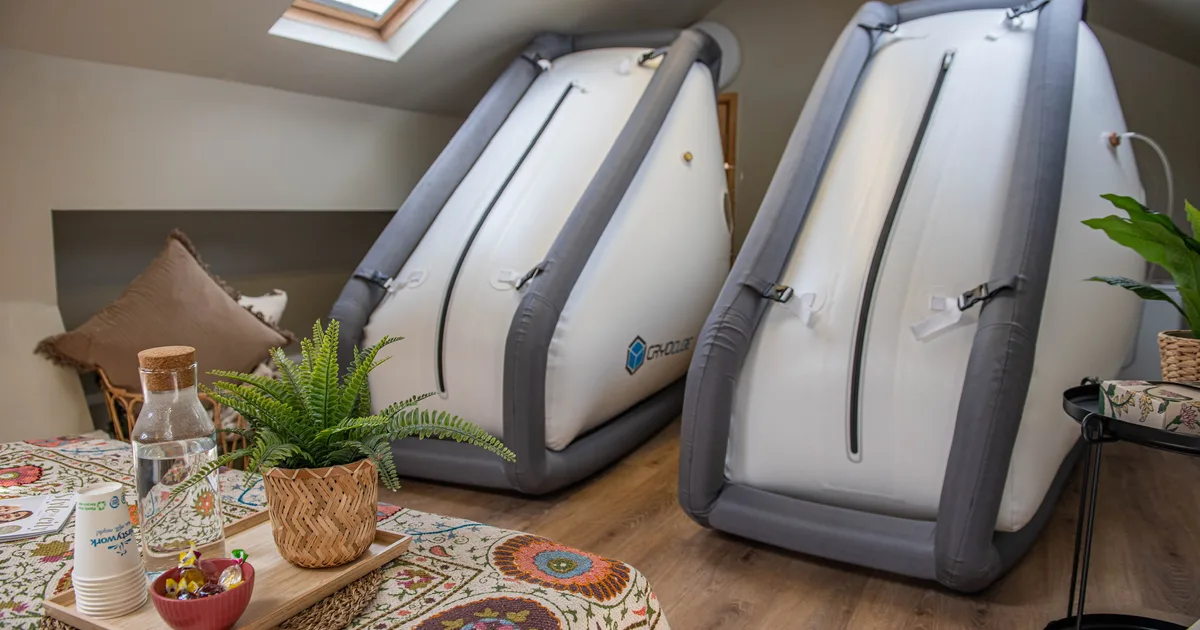
Hyperbaric oxygen therapy: HBOT: sounds technical, but the principle is straightforward. You breathe concentrated oxygen inside a pressurised chamber. The increased pressure dissolves oxygen directly into your blood plasma, delivering it to tissues throughout your body.
It's not new. HBOT has been used in clinical medicine for decades, and NHS hospitals use it for conditions like decompression sickness and non-healing wounds. More recently, private clinics have made it accessible for a wider range of patients: from post-surgical recovery to general wellness support.
Here's how it works, what the evidence says, and what to expect if you're considering it.
How hyperbaric oxygen therapy works
Normally, oxygen travels through your bloodstream attached to haemoglobin in red blood cells. There's a limit to how much oxygen haemoglobin can carry: and when tissue demand is high or circulation is compromised, that limit matters.
HBOT changes the equation. Inside a hyperbaric chamber, atmospheric pressure is increased to 1.3-2.0 times normal. At this pressure, oxygen dissolves directly into your blood plasma: the liquid part of your blood: independent of red blood cells.
This means oxygen can reach areas that red blood cells may struggle to supply effectively: areas with reduced blood flow, damaged tissue, or inflammation.
What conditions is HBOT used for?
HBOT has an established evidence base for several clinical applications:
Well-established uses (NHS/clinical):
- Decompression sickness (the bends)
- Carbon monoxide poisoning
- Non-healing diabetic foot ulcers
- Radiation injury (soft tissue and bone)
- Compromised skin grafts and flaps
- Certain serious infections (gas gangrene, necrotising fasciitis)
Emerging and private-sector uses:
- Post-surgical recovery support
- Sports injury recovery
- Chronic fatigue and fibromyalgia (research ongoing)
- Traumatic brain injury recovery (research ongoing)
- General wellness and recovery optimisation
The evidence base varies by condition. For wound healing and decompression sickness, the data is strong and well-established. For newer applications like recovery support and wellness, research is promising but ongoing. Any claims about HBOT should be understood in this context.
What happens during an HBOT session
A typical session at IronOx Clinic works like this:
- You enter the chamber: a transparent, pressurised unit large enough to sit or recline comfortably. You can see out at all times.
- The chamber pressurises: this takes a few minutes. You may feel pressure in your ears, similar to taking off in an aeroplane. Swallowing or yawning helps equalise.
- You breathe normally: the chamber fills with concentrated oxygen. You don't need a mask or any special equipment. Just sit back and relax.
- The session runs for approximately one hour: many patients read, listen to podcasts, or simply rest.
- The chamber depressurises: gradually returned to normal pressure over a few minutes.
That's it. Most patients describe it as "surprisingly boring": in the best possible way.
Side effects and safety
HBOT has a well-established safety profile. Side effects are uncommon and generally mild:
Common:
- Temporary ear pressure or discomfort during pressurisation (similar to flying)
- Mild fatigue after the session
Uncommon:
- Temporary short-sightedness (reversible, resolves within days of completing treatment)
- Sinus pressure
Rare:
- Oxygen toxicity (extremely unlikely at the pressures used in clinical practice)
- Barotrauma (ear or sinus injury from pressure changes: preventable with proper technique)
HBOT is not suitable for everyone. Patients with certain lung conditions, untreated pneumothorax, or specific ear conditions may not be candidates. Dr. Ros assesses suitability before any treatment begins.
Interested in HBOT?
At IronOx Clinic, HBOT sessions are available standalone or combined with your iron infusion as part of our IronOx Therapy programme.
Book Your ConsultationFree telephone consultation · No referral · No waiting list
HBOT and iron infusion: why we offer both
At IronOx Clinic, we're primarily an iron infusion clinic. So why do we offer HBOT?
The connection is oxygen delivery. Iron is essential for haemoglobin production: haemoglobin carries oxygen via red blood cells. HBOT delivers oxygen via a different route: dissolved directly in plasma. The two mechanisms are complementary: iron rebuilds your oxygen-carrying capacity, HBOT supplements oxygen delivery through a parallel pathway.
This is why we created IronOx Therapy: every iron infusion at IronOx includes one complimentary HBOT session at the same clinic, with the option to add a full course. For patients who want to complement their iron restoration with oxygen therapy, everything happens under one roof.
The extra HBOT is entirely optional. The iron infusion alone is the core treatment, and it works well on its own. The complimentary session is included with every infusion; a full course (the Course) is for patients who want to explore the additional benefits of oxygen therapy alongside their infusion.
HBOT in Cardiff
Finding HBOT in Cardiff has historically meant searching through wellness centres or travelling to specialist facilities outside Wales. At IronOx Clinic, HBOT is available in Cardiff: administered in a clinical setting, overseen by a GMC-registered doctor.
Sessions are available as:
- Included with IronOx Therapy: one complimentary HBOT session with every iron infusion (IronOx 500: £699 / IronOx 1000: £899), with the separate option to buy The Course: 10 sessions for £750
- Standalone sessions: £95 to try one session or £750 for the 10-session Course
See our full Hyperbaric Oxygen Therapy in Cardiff service page for pricing and how to book, or our iron infusion cost page for the infusion pricing.
No appointment is needed for HBOT drop-in sessions. Book a consultation if you'd like Dr. Ros to assess whether HBOT is appropriate for you, or learn more about IronOx Therapy.
Reported side effects, by how often they occur
| How often | Effect | What it feels like |
|---|---|---|
| Common | Ear pressure during pressurisation | Similar to an aircraft taking off; swallowing or yawning equalises it |
| Common | Mild tiredness after a session | Usually settles the same day |
| Uncommon | Temporary short-sightedness | Reversible, and resolves after treatment finishes |
| Uncommon | Sinus pressure | More likely if you are congested; sessions are deferred if you are |
| Rare | Barotrauma of the ear or sinus | Pressure injury; prevented by equalising technique and a graded ascent |
| Rare | Oxygen toxicity | Extremely unlikely at the pressures used in clinical practice |
What to ask an HBOT provider
Hyperbaric oxygen is offered in the UK by clinical services and by wellness businesses, and the two are not the same thing. Before booking anywhere, ask:
- Who assesses whether it is safe for me, and are they medically registered?
- What pressure do you run, and for how long? The protocol should be stated, not vague.
- What are the contraindications you screen for? Untreated pneumothorax and some lung and ear conditions rule people out.
- What evidence do you rely on for the specific thing I am coming for? If the honest answer is that the evidence is limited, you should be told that.
- What would make you turn me away?
Sources
- NHS England, Clinical commissioning policy: hyperbaric oxygen therapy for carbon monoxide poisoning: NHS England states that hyperbaric oxygen is not routinely commissioned for the treatment of acute carbon monoxide poisoning.
- Cochrane, Hyperbaric oxygen therapy for chronic wounds (2015): the Cochrane review found improved healing of diabetic foot ulcers in the short term but not at 12 months, and judged the trials methodologically weak.
- NICE, Multiple sclerosis in adults: management (NG220): recommendation 1.5.11 states "Do not offer hyperbaric oxygen to treat fatigue in people with MS".
Medically reviewed by Dr Rukhsana Jabar ("Dr Ros"), GMC-registered doctor (GMC 7265326).
Frequently asked questions
What does hyperbaric oxygen therapy do?
HBOT delivers concentrated oxygen at above-normal atmospheric pressure. This dissolves oxygen directly into your blood plasma, allowing it to reach tissues independently of red blood cells. It's used clinically for wound healing, post-surgical recovery, and a range of conditions where oxygen delivery to tissues is impaired.
Is HBOT safe?
HBOT is a well-established therapy used in NHS hospitals and private clinics worldwide. Side effects are uncommon: the most frequently reported is temporary ear pressure, similar to what you'd feel on an aeroplane. Serious complications are extremely rare when sessions are supervised by trained clinicians.
How many HBOT sessions do I need?
This depends on why you're having HBOT. For general wellness and recovery support, a course of 10 sessions over 2-4 weeks is common. For specific clinical conditions, protocols may vary. Dr. Ros will advise on the appropriate course for your situation.
Can I have HBOT if I'm claustrophobic?
Modern hyperbaric chambers are transparent and spacious enough that most patients with mild claustrophobia manage comfortably. You can see out at all times, communicate with staff, and the session can be stopped at any point if you're uncomfortable.
Is HBOT available on the NHS?
NHS hospitals use HBOT for specific conditions: most commonly decompression sickness and certain non-healing wounds. For broader use, including recovery support and wellness, private clinics are the primary route in the UK.