
- Published by:
- Dr Rukhsana Jabar
- Medically reviewed by:
- Dr Rukhsana Jabar
- Last reviewed:
- Published:
- Last updated:
- Reading time
- 7 min read
HBOT for Athletes: Does Hyperbaric Oxygen Speed Up Recovery?
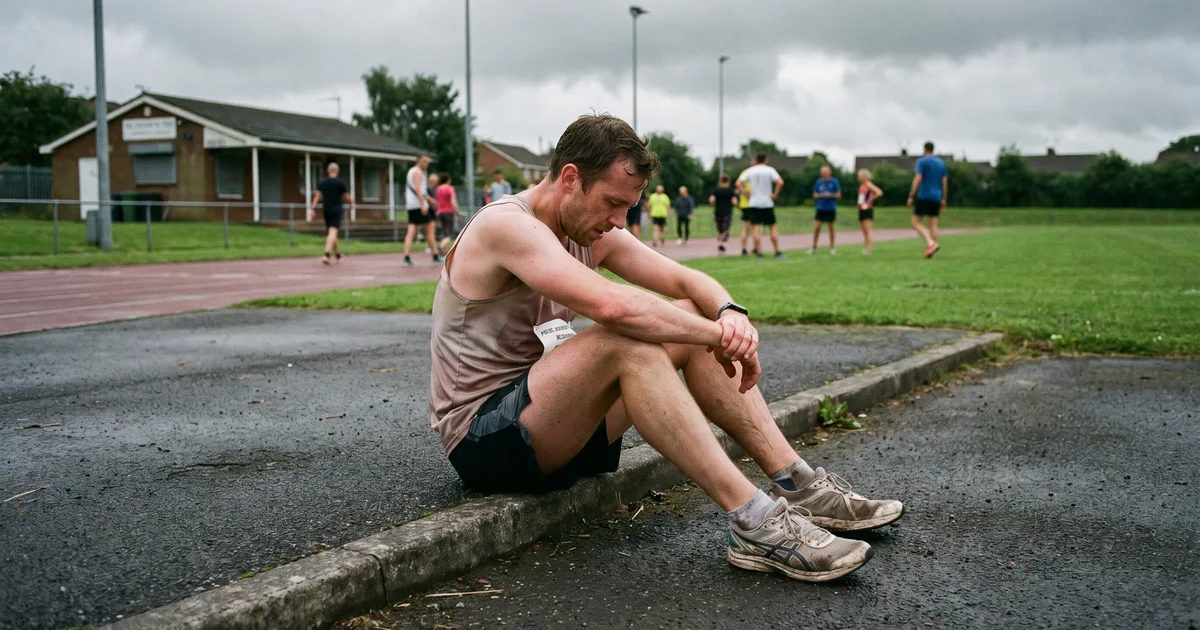
Hyperbaric oxygen therapy has a real, well-evidenced role in healing damaged tissue, and a much less certain one in day-to-day athletic recovery. Both matter if you are an athlete deciding whether to spend time and money on it, so here is the split.
Where the evidence is strongest: injury, not recovery
Hyperbaric medicine's proven territory is tissue that is short of oxygen. An acute soft-tissue injury qualifies: swelling raises pressure in the tissue, compresses small vessels, and reduces perfusion at exactly the moment the repair process needs more oxygen, not less.
Raising dissolved plasma oxygen bypasses part of that problem, because plasma oxygen does not depend on red blood cells reaching the tissue. This is the same mechanism behind HBOT's established use in crush injury, compromised skin grafts and non-healing wounds; settings where the evidence is genuinely strong.
Applying it to a hamstring tear or a high ankle sprain is a reasonable extension of that logic, and it is where most serious sports use of hyperbaric oxygen sits: shortening a rehabilitation window on a specific injury.
Where the evidence is mixed: routine recovery
Studies on hyperbaric oxygen for delayed-onset muscle soreness and post-exercise recovery have produced genuinely conflicting results. Some trials report faster return of muscle strength and reduced soreness markers. Others find no meaningful difference from a sham or low-pressure control.
Two honest observations about that literature:
- Sample sizes are small. Most of these trials run a few dozen participants, which is enough to generate a signal and not enough to settle a question.
- Blinding is hard. You can feel a chamber pressurising. Sham controls in hyperbaric research are imperfect, and the placebo response in recovery research is not small.
That does not mean it does nothing. It means the confident claims you will see online are ahead of the data.
Where there is no good evidence: performance
There is no solid evidence that hyperbaric oxygen improves performance in a healthy, well-trained athlete. Your haemoglobin is already close to saturated breathing normal air; the extra oxygen HBOT delivers is dissolved in plasma and is cleared within a short time after the session ends. There is no mechanism by which a session on Tuesday raises your VO₂ max on Saturday.
If a provider frames HBOT as a performance enhancer rather than a recovery and rehabilitation tool, they are past the evidence.
Is it allowed in competition?
Hyperbaric oxygen therapy is not on the World Anti-Doping Agency prohibited list. Breathing oxygen, including at pressure, is permitted; the prohibition in this area concerns manipulating blood and its components, which HBOT does not do.
Prohibited-list status is reviewed annually, so any athlete in a tested sport should confirm current guidance directly rather than relying on an article.
What it is not a substitute for
Hyperbaric oxygen sits fairly low on the list of things that determine how well an athlete recovers. Ahead of it, with far better evidence:
- Sleep. The single largest modifiable recovery variable, and the one most often sacrificed.
- Total energy availability. Under-fuelling blunts adaptation and slows tissue repair.
- Load management. Most soft-tissue injuries are load errors, not oxygen problems.
- Iron status. Covered below, and routinely missed.
A chamber is not a fix for a training plan or a sleep debt.
The recovery problem that gets missed: iron
This deserves its own section because it is common in athletes and frequently mistaken for overtraining.
Endurance athletes; distance runners especially; lose iron through several routes at once: foot-strike haemolysis, gastrointestinal losses during hard training, sweat, and in menstruating athletes, monthly blood loss on top. Training also drives a temporary rise in hepcidin, the hormone that blocks iron absorption, in the hours after a hard session. The result is that athletes can run down iron stores while eating what looks like an adequate diet.
The symptoms look exactly like under-recovery: heavy legs, declining session quality, elevated perceived effort at the same pace, poor response to a taper, breathlessness that does not match fitness.
And here is why it matters in an article about oxygen: iron is what you build haemoglobin from. Low iron means less haemoglobin, which means less oxygen carried per unit of blood; a direct, measurable ceiling on aerobic capacity. Breathing oxygen at pressure for an hour does not raise that ceiling. Fixing the iron does.
Ferritin is a blood test. In athletes it is worth checking before concluding you need a chamber, and worth rechecking if you have raised your training load substantially.
Heavy legs and sessions going backwards?
Low iron is one of the most missed causes of stalled training, and a ferritin blood test settles it. Check your symptoms in two minutes and get your free personalised plan.
Check symptoms + get free planFree telephone consultation · No referral · No waiting list
A sensible way to use HBOT as an athlete
If you decide it is worth trying:
- Use it for a specific injury, with a target and a rehab plan around it, rather than as a standing habit.
- Expect a course, not a session. Hyperbaric oxygen is dose-dependent; 10-40 sessions is the range clinical protocols use.
- Get screened first. Ear problems, lung conditions and certain medications matter, and a session at pressure is not the moment to discover one.
- Check the pressure. A soft chamber at 1.3 ATA and a clinical chamber at 2.0 ATA are different treatments sold at similar prices.
- Fix the basics first. Sleep, fuelling, load, iron. Then consider the chamber.
Summary
Hyperbaric oxygen therapy is best understood by athletes as a rehabilitation tool with a plausible mechanism and a real but incomplete evidence base; strongest for injured tissue, mixed for routine recovery, and unsupported for performance. Used for the right thing, after the fundamentals are in place, it is a reasonable option. Used as a shortcut past sleep, fuelling or an unchecked ferritin, it is an expensive way to avoid the actual answer.
Where the evidence sits, by use case
| Use case | What the evidence supports | Source |
|---|---|---|
| Wound and tissue healing | Improved healing of diabetic foot ulcers in the short term, but not at 12 months, in trials the reviewers judged methodologically weak | Cochrane 2015 |
| Routine training recovery | No controlling UK guideline recommends it; the evidence base is small and mixed | No UK guideline recommendation |
| Performance enhancement | Not supported | No UK guideline recommendation |
| Fatigue | Explicitly recommended against in multiple sclerosis | NICE NG220, recommendation 1.5.11 |
What to ask before you book
- What is the evidence for the specific outcome I want? For performance, the honest answer is that there is not good evidence.
- Have I ruled out the boring explanations first? Ferritin, by name, before anything else.
- Who screens me, and what would rule me out?
- What protocol do you run, at what pressure?
- Is it permitted in my sport? Check your own governing body's current list rather than taking a clinic's word for it.
Sources
- Cochrane, Hyperbaric oxygen therapy for chronic wounds (2015): the Cochrane review found improved healing of diabetic foot ulcers in the short term but not at 12 months, and judged the trials methodologically weak.
- NICE, Multiple sclerosis in adults: management (NG220): recommendation 1.5.11 states "Do not offer hyperbaric oxygen to treat fatigue in people with MS".
- NICE, Autism spectrum disorder in under 19s (CG170): recommendation 1.6.4 lists hyperbaric oxygen therapy among the interventions not to be used to manage autism in any context.
Medically reviewed by Dr Rukhsana Jabar ("Dr Ros"), GMC-registered doctor (GMC 7265326).
Related reading: HBOT benefits: what the evidence shows · HBOT side effects and safety · What is a hyperbaric chamber? · Does the NHS offer HBOT?
In Wales: Hyperbaric oxygen therapy in Cardiff · HBOT across Wales
Frequently asked questions
Does HBOT help athletic recovery?
The evidence is mixed. Hyperbaric oxygen has an established role in healing injured, oxygen-starved tissue, and several studies show faster recovery of muscle function after intense exercise. Other trials show no difference from placebo. It is a plausible and actively researched recovery tool, not a proven one, and it is not a substitute for sleep, nutrition and load management.
Do professional athletes use hyperbaric chambers?
Yes; hyperbaric chambers are used in professional football, rugby, combat sports, endurance sport and by some Olympic programmes, usually for injury rehabilitation rather than routine recovery. Their use by elite athletes reflects the risk-reward of shortening a rehab window, not settled proof of effectiveness.
Is HBOT banned in sport?
No. Hyperbaric oxygen therapy is not on the World Anti-Doping Agency prohibited list. Breathing oxygen at pressure is permitted. Athletes should still check current WADA guidance directly, since prohibited-list status is reviewed annually.
How many HBOT sessions do athletes have?
Injury rehabilitation protocols typically run 10-40 sessions depending on the injury. Recovery-focused use is usually shorter, often 5-10 sessions around a competition block or a heavy training phase. Hyperbaric oxygen is dose-dependent, so single sessions are unlikely to do much.
Can HBOT improve athletic performance?
There is no good evidence that hyperbaric oxygen improves performance in a healthy, well-trained athlete. The research interest is in recovery and injury healing, not in raising baseline capacity. Anyone selling it as a performance enhancer is going beyond the data.