
Get a clearer next step for your iron symptoms
Answer seven quick questions to see your symptom pattern and create a personalised Personal Iron Clarity Plan in about 60 seconds.
Instant result · No email required · The personalised plan is optional.
Educational guidance, not a diagnosis. Blood tests and clinical assessment confirm iron deficiency.
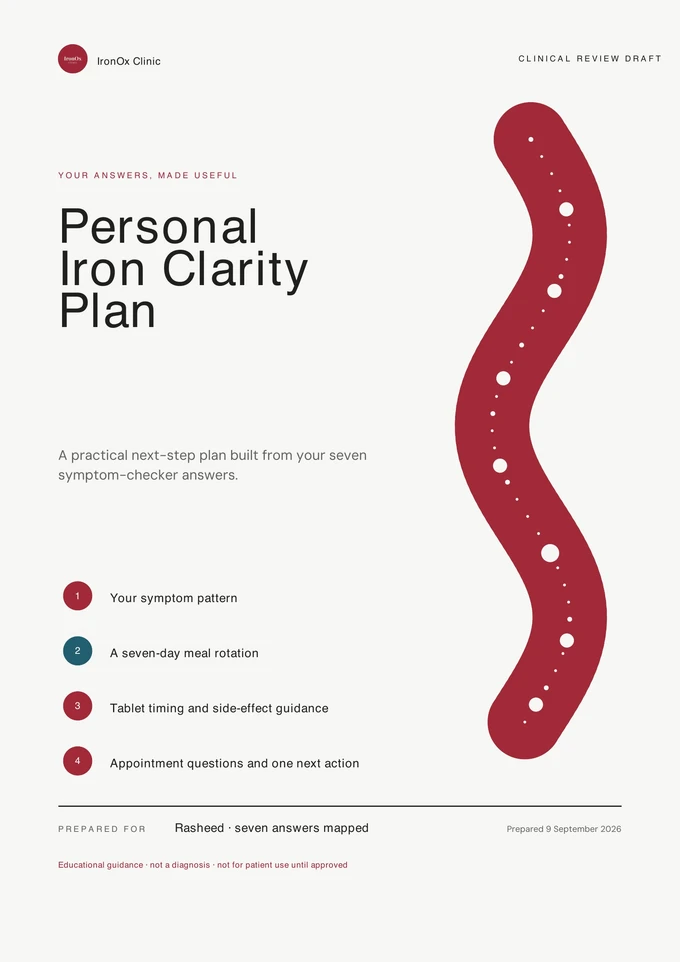
14 pages · personalised · free
How would you describe your energy levels?
Can a quiz tell you whether your iron is low?
No — and any tool that says otherwise is overselling. Iron deficiency is confirmed by a blood test, specifically ferritin, which measures your iron stores and is not included in a standard full blood count. That is why iron can be genuinely low while routine results come back "normal".
What your symptoms can tell you is whether testing is worth doing. The pattern most often associated with low iron is fatigue that sleep doesn't fix, breathlessness on stairs that used to be easy, brain fog, hair shedding, restless legs at night, and — in women — heavy periods. This checker organises that pattern and suggests a reasonable next conversation. It is not a diagnosis.
Why check for iron deficiency?
Iron deficiency is the most common nutritional deficiency worldwide, affecting around 1 in 5 women in the UK. It occurs when your body doesn't have enough iron to produce haemoglobin — the protein in red blood cells that carries oxygen around your body.
Symptoms develop gradually. Most people don't notice a sudden change — they slowly adapt to feeling worse over weeks or months. Persistent fatigue, brain fog, breathlessness, hair loss, and restless legs are hallmark signs, but many people attribute them to stress, age, or "just being tired" and live with iron deficiency for years before seeking help.
Common causes include heavy periods, pregnancy, poor dietary absorption, coeliac disease, and chronic conditions that affect the gut. Iron tablets are the standard first treatment, but up to 50% of patients can't tolerate them or don't absorb them effectively.
The good news: once identified, iron deficiency is highly treatable. An iron infusion can restore your levels in a single session — delivering up to 1,000mg of iron directly into your bloodstream in around 30 minutes. Most patients notice improvement within 1–2 weeks.
Who is this symptom checker for?
This free self-assessment is designed for anyone experiencing unexplained fatigue, hair loss, breathlessness, or other symptoms that could indicate low iron. It's particularly relevant if you:
- Have tried iron tablets but they didn't help or you couldn't tolerate them
- Have heavy periods and feel increasingly drained each month
- Are preparing for surgery and need to optimise your iron levels
- Are trying to conceive or are pregnant and have been told your iron is low
- Have a GP blood test showing low ferritin or low haemoglobin
- Simply feel exhausted, foggy, and not yourself — and want to know why
Frequently asked questions
You cannot know from symptoms alone — it takes a blood test. The one that matters is ferritin, which measures your iron stores; it is not part of a standard full blood count, so iron can be low while routine bloods read normal. Symptoms tell you whether testing is worthwhile. The pattern most associated with low iron is fatigue that sleep doesn't fix, breathlessness on stairs, brain fog, hair shedding, restless legs at night, and heavy periods. If several of those apply, a ferritin test is a reasonable next step.
No, and the difference matters. Iron deficiency means your iron stores are depleted. Anaemia (spelled anemia outside the UK) means your haemoglobin has fallen far enough to reduce the oxygen your blood carries. Iron deficiency comes first and can cause fatigue, brain fog and hair loss long before anaemia appears — which is why a normal full blood count does not rule it out. Ferritin is the test that distinguishes them.
This is a screening tool, not a diagnosis. It flags common patterns associated with iron deficiency — but overlapping conditions like thyroid disorders, B12 deficiency, or coeliac disease can cause similar symptoms. A blood test is the only way to confirm iron deficiency. If your results suggest iron deficiency, booking a consultation or blood test is the logical next step.
The checker evaluates fatigue severity, brain fog, breathlessness, dizziness, heart palpitations, restless legs, hair loss, brittle nails, response to iron tablets, heavy periods, and your iron testing history. These are the most common clinical indicators of iron deficiency and iron deficiency anaemia.
Yes. Many people with low ferritin adapt gradually and don't realise how unwell they feel until their levels are restored. This is especially common when ferritin is between 15–30 µg/L — technically 'normal' by some lab ranges, but low enough to cause fatigue and cognitive symptoms. If you scored low but still feel unwell, a blood test is still worthwhile.
You'll see a result indicating whether your symptoms are more or less consistent with iron deficiency. From there, you can book a consultation with Dr Ros (no GP referral needed), book a blood test directly, or optionally receive a personalised iron plan by email.
No. IronOx Clinic operates as a private clinic — you can book a consultation or blood test directly without a referral. If you already have recent blood results (within 3 months), bring them to your appointment to save time.
This tool is not a medical diagnosis. It is designed to help you understand whether your symptoms could be related to iron deficiency and whether a consultation might be appropriate. It does not replace professional medical advice.