
Get a clearer next step for your iron symptoms
Answer seven quick questions to see your symptom pattern and create a personalised Personal Iron Clarity Plan in about 60 seconds.
This quiz cannot diagnose low iron. It can help you note symptoms to discuss with a clinician. Symptoms can have many causes; appropriate blood tests and clinical assessment are needed to confirm iron deficiency and interpret results. Your result is a starting point, not a diagnosis or treatment recommendation. See the NHS guidance on iron deficiency anaemia and blood tests.
Instant result · No email required · The personalised plan is optional.
Educational guidance, not a diagnosis. Blood tests and clinical assessment confirm iron deficiency.
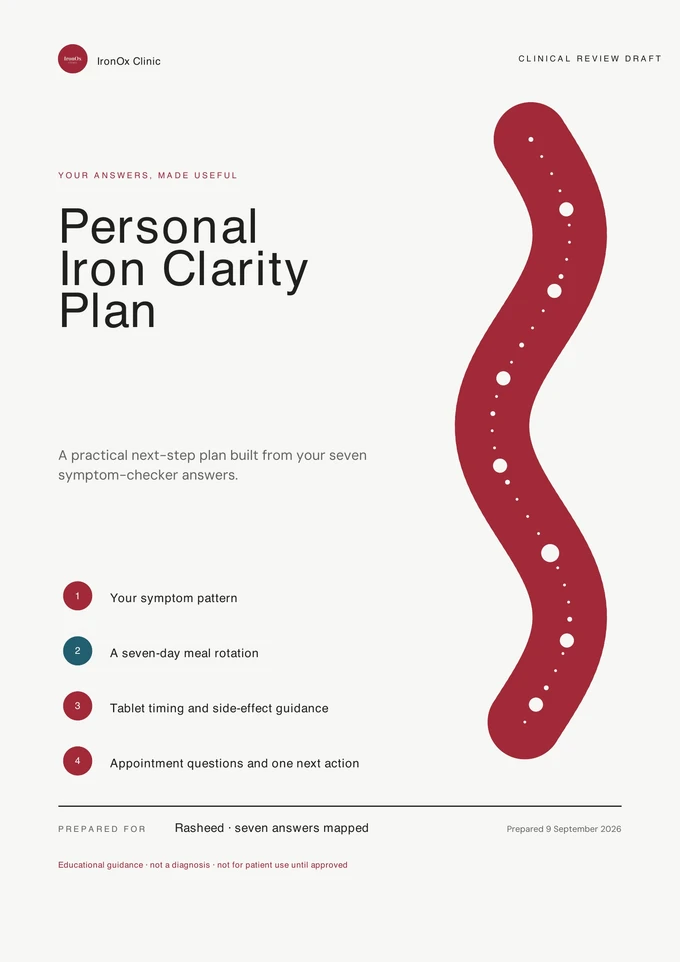
14 pages · personalised · free
How would you describe your energy levels?
Can a quiz tell you whether your iron is low?
No. Symptoms alone cannot confirm iron deficiency. A healthcare professional considers your history and decides which tests are appropriate; blood tests can help assess possible causes. Read the NHS guidance on iron deficiency anaemia and blood tests.
Symptoms such as fatigue or breathlessness can occur with iron deficiency but may have other causes. This checker organises your answers for a conversation; it does not decide whether you need a particular test or treatment.
Why check for iron deficiency?
Iron deficiency is the most common nutritional deficiency worldwide, affecting around 1 in 5 women in the UK. It occurs when your body doesn't have enough iron to produce haemoglobin — the protein in red blood cells that carries oxygen around your body.
Symptoms develop gradually. Most people don't notice a sudden change — they slowly adapt to feeling worse over weeks or months. Persistent fatigue, brain fog, breathlessness, hair loss, and restless legs are hallmark signs, but many people attribute them to stress, age, or "just being tired" and live with iron deficiency for years before seeking help.
Common causes include heavy periods, pregnancy, poor dietary absorption, coeliac disease, and chronic conditions that affect the gut. Iron tablets are the standard first treatment, but up to 50% of patients can't tolerate them or don't absorb them effectively.
The good news: once identified, iron deficiency is highly treatable. An iron infusion can restore your levels in a single session — delivering up to 1,000mg of iron directly into your bloodstream in around 30 minutes. Most patients notice improvement within 1–2 weeks.
Who is this symptom checker for?
This free self-assessment is designed for anyone experiencing unexplained fatigue, hair loss, breathlessness, or other symptoms that could indicate low iron. It's particularly relevant if you:
- Have tried iron tablets but they didn't help or you couldn't tolerate them
- Have heavy periods and feel increasingly drained each month
- Are preparing for surgery and need to optimise your iron levels
- Are trying to conceive or are pregnant and have been told your iron is low
- Have a GP blood test showing low ferritin or low haemoglobin
- Simply feel exhausted, foggy, and not yourself — and want to know why
Frequently asked questions
Symptoms alone cannot show whether you have low iron because they can have other causes. A healthcare professional can consider your symptoms and history and decide whether blood tests are appropriate. This quiz can help you organise what you have noticed, but it cannot diagnose iron deficiency.
Iron deficiency means the body has too little available iron; anaemia means haemoglobin is below the relevant range. They can occur together, but one does not automatically mean the other. Symptoms, medical history and appropriate blood-test results need to be interpreted together by a healthcare professional.
This is an educational screening aid, not a diagnostic test. It does not measure blood results or confirm iron deficiency. Similar symptoms can have other causes; a healthcare professional can consider your history and decide whether blood testing is appropriate.
The checker evaluates fatigue severity, brain fog, breathlessness, dizziness, heart palpitations, restless legs, hair loss, brittle nails, response to iron tablets, heavy periods, and your iron testing history. These are the most common clinical indicators of iron deficiency and iron deficiency anaemia.
Yes. Many people with low ferritin adapt gradually and don't realise how unwell they feel until their levels are restored. This is especially common when ferritin is between 15–30 µg/L — technically 'normal' by some lab ranges, but low enough to cause fatigue and cognitive symptoms. If you scored low but still feel unwell, a blood test is still worthwhile.
You'll see a result indicating whether your symptoms are more or less consistent with iron deficiency. From there, you can book a consultation with Dr Ros (no GP referral needed), book a blood test directly, or optionally receive a personalised iron plan by email.
No. IronOx Clinic operates as a private clinic — you can book a consultation or blood test directly without a referral. If you already have recent blood results (within 3 months), bring them to your appointment to save time.
This tool is not a medical diagnosis. It is designed to help you understand whether your symptoms could be related to iron deficiency and whether a consultation might be appropriate. It does not replace professional medical advice.